
Self-Care Isn’t a Luxury: It’s a Leadership Practice

Self-care strengthens resilience, trust, and the practice of leading well.
When we hear the phrase self-care, many of us picture spa days, bubble baths, or long weekends away. Nice if you can, although rarely realistic in the thick of leadership.
The truth is: real self-care is less about escape and more about rhythm. It’s about building practices and structures that restore leaders in the day-to-day — not just when things calm down.
Why Self-Care Matters in Leadership
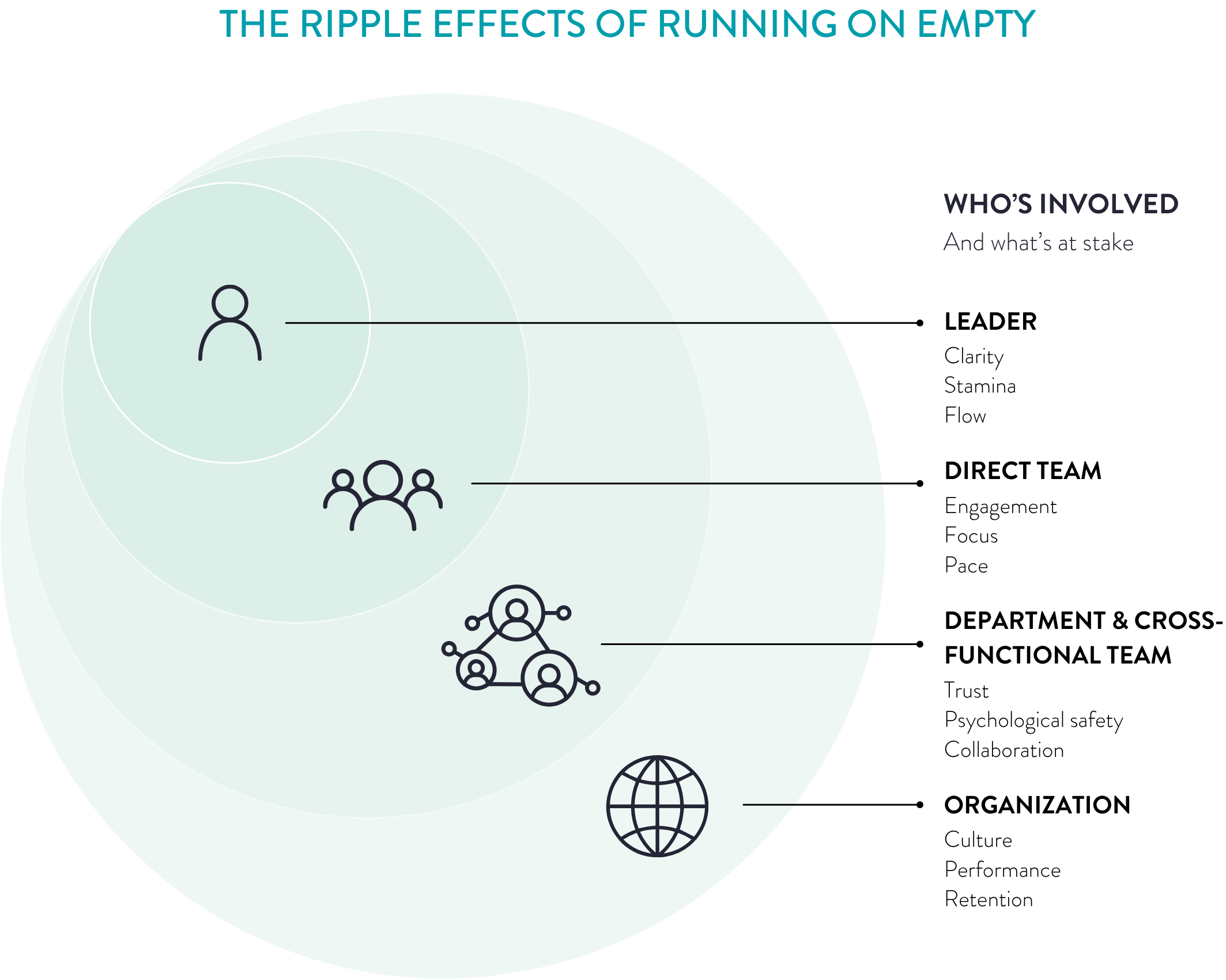
We’ve worked with many leaders who quietly run on empty. They’re skilled, committed, deeply values-driven — and completely stretched to the edge. And when leaders run down their reserves, ripple effects show up fast:
Stress leaks into culture. People feel it when their leaders are depleted. Tension rises, trust dips, and conversations get hotter than they need to be.
Decision-making slows. Tired leaders default to caution or autopilot, missing creative possibilities.
Teams mirror the pace. If leaders push through without pause, people follow, and burnout spreads.
People leave. Cultures that drain people don’t retain people.
By contrast, when leaders protect even small spaces for rest, reflection, and recharge, something shifts. Energy steadies, choices get clearer, and teams feel permission to breathe and reset, too.
What Self-Care Really Looks Like and Why We Skip It
The barrier to self-care isn’t ignorance. Most leaders know they need rest — they just feel they can’t afford it. The pressure to respond, to be available, to keep pace, is real. In Canada, one in five people report high or very high work-related stress, with heavy workload and work-life balance as top drivers.
That pressure doesn’t just wear leaders down, it sets the tone for the whole team. In turn, senior leaders who model boundaries and build structures that make self-care possible create conditions for everyone to thrive.
To identify how and where self-care can strengthen your leadership, ask yourself:
Where am I overriding signals from my body and mind that I need a break?
What small reset could I build into my daily or weekly rhythm?
How might my team benefit if I showed up more equipped, present, and steady?
What expectations — from my peers, my industry, society — feel like they demand I never stop working? Are they real or perceived?
What would happen if I practiced setting a boundary — even a small one — like delaying a reply or saying no to an extra task?
You don’t have to carve out huge blocks of time. Sometimes it’s as simple as planting your feet, taking two or three deep breaths, and noticing what you need. That moment of mindfulness creates space for conscious choice. From there, it’s more effective to weave restorative practices into the flow of leadership.
Here are a few that make a real difference:
Micro-breaks. A 2-minute pause between meetings to stretch, breathe, or step outside. (Sounds small. It’s not.)
Rhythms of reflection. Ending the week with 10 minutes to write: What energized me? What drained me? What do I need more of? What do I need less of?
Boundaries with intention. Choosing one “no” this month creates space for a bigger “yes”.
Relational care. Self-care isn’t just solo — it’s connecting with peers who remind you you’re not carrying it all alone.
Managing up. Naming pressure points with senior leaders and proposing alternatives that protect focus and energy.
Modelling. Showing your team the power of choice — by taking breaks yourself, delegating, and making it clear they can too.
Incorporating even one of these consistently into your leadership practice helps keep your system resourced, without long sabbaticals or major schedule overhauls.
The Takeaway
Self-care isn’t separate from leadership. It is leadership.
When leaders are energized, they’re clearer, steadier, and more intentional. Teams feel it. Cultures shift. Work becomes more sustainable — and more human.
When you invest in self-care as a regular practice, your leadership grows stronger and more resilient — and your team thrives alongside you.
Where could you build a rhythm of self-care into your leadership?
Ready to leverage well-being as a key to a culture of leadership?
At 3fold, our leadership development programs help leaders and teams build rhythms that sustain performance over time, from practicing mindfulness as a means of understanding needs, to setting boundaries without being over-responsible, and managing up by communicating in healthy, productive ways. If you’d like to explore how self-care, leadership, and culture can come together in your organization, let’s connect.